
TECHNOLOGY

OH Radical-Based Smoke and VOC Decomposition Technology
Unlike ordinary air purifiers, OHbrid immediately oxidizes and decomposes grease vapors, odors, fine dust, and VOCs (volatile organic compounds) generated in kitchens using the power of the OH Radical (Hydroxyl Radical).
This technology converts ultrafine particles and odor molecules into water (H₂O), creating a filterless wet purification system that removes airborne pollutants without the need for ducts or filters.
Oxidation and Purification Mechanism of OH Radicals
OH radicals are the most powerful oxidizing agents found in nature.
They react with hydrocarbon components (VOCs) in grease smoke, converting them into CO₂ and H₂O.
OHbrid’s proprietary radical generation system continuously supplies and circulates radicals without producing by-products such as ozone (O₃) or hydrogen peroxide (H₂O₂), maximizing purification efficiency.
Through this process, the system maintains clean indoor air and provides a safe environment for human use.
Sustainable Eco-Friendly Purification Solution
The OHbrid system requires no filter replacement, and any by-products generated during purification are discharged as water, resulting in minimal maintenance costs.
It operates in an indoor recirculating structure without external duct installation, reducing energy loss while preventing building façade damage and exhaust gas issues in urban areas.
As a result, OHbrid is the world’s first eco-friendly kitchen smoke purifier that realizes the concept of a “ductless kitchen.”
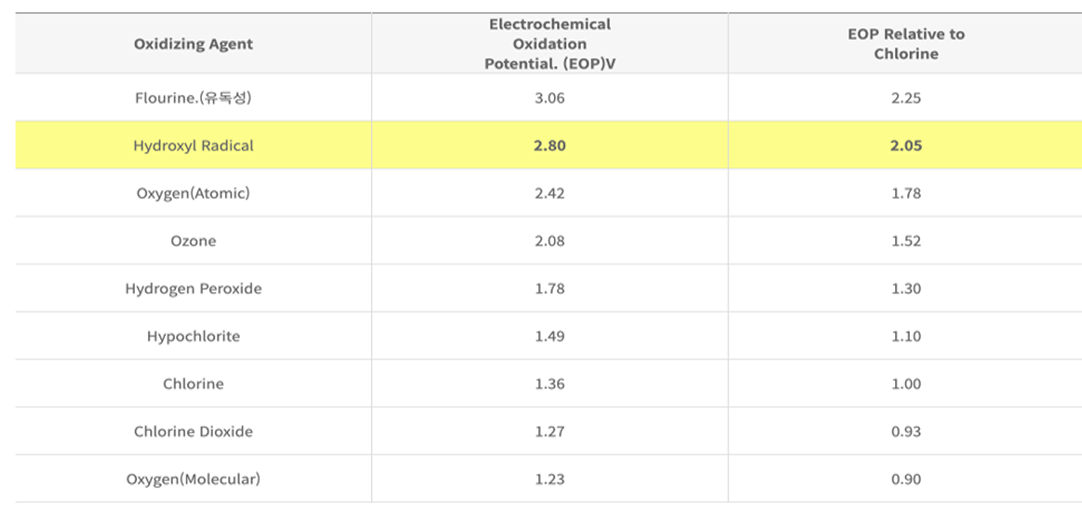
Comparison Table of Reactivity Among Various Oxidizing Agents Including OH Radicals – Source: University of Southern California
OH Radical Generation Technology (Hydroxyl Radical Generation Technology)
OHbrid applies next-generation technology that enables stable and continuous generation of OH radicals (·OH) through a patented Cluster Molecular Reaction Structure, without the use of electrical discharge, ultraviolet light, ultrasound, or catalytic reactions.
1. Water-Based Molecular Reaction Structure
Moisture (H₂O) molecules in the air are partially ionized and dissociated under specific electrical and thermal conditions, generating •OH (hydroxyl radicals) and H· (hydrogen radicals).
This process does not involve ozone (O₃) or hydrogen peroxide (H₂O₂), but instead utilizes a “pure water-based Electron Transfer Reaction.”
2. Molecular Cluster Stabilization System
The generated OH radicals typically have an extremely short lifespan—on the order of nanoseconds (ns).
However, within OHbrid, these radicals are stabilized inside water molecular clusters (clusters of H₂O molecules), forming a quasi-stable state in which their reactivity is maintained for a certain duration.
Because “reactant regeneration” occurs naturally within the water molecule clusters, without solid catalysts, the OH radicals are continuously supplied and circulated in a self-sustaining manner.
3. Enclosed Reactive Safety Structure
The reaction chamber is completely sealed.
Even if trace amounts of ozone or hydrogen peroxide are momentarily produced, they are reduced back to H₂O within the chamber, without any external leakage.
Since the final by-product is pure water, the system ensures 100% human safety, even when installed indoors.
Sterilization & Oxidative Mechanism of OH Radicals
OH radicals are among the most powerful reactive oxygen species (ROS) found in nature.
They act instantly on bacteria, viruses, fungi, odor molecules, and VOCs, oxidizing and decomposing proteins, lipids, and nucleic acids, thereby destroying cells.
Mechanism of Action
- Protein Oxidation
OH radicals directly react with the –S–S (disulfide bonds) and –CH₂– groups of microbial cell membranes, disrupting their structural integrity and causing the cell membrane to collapse.
R”–” CH_2 “–” R^′+⋅OH→R”–” CH⋅”–” R^′+H_2 O
As a result, the cell experiences osmotic imbalance and ruptures within a short period of time.
2. Lipid Peroxidation
OH radicals react with the phospholipids in bacterial membranes, attacking the double bonds (C=C) in the lipids.
This oxidizes the cell membrane, disrupting cellular respiration and blocking energy metabolism.
R”–” CH=CH”–” R^′+⋅OH→R”–” CHOH”–” CH⋅”–” R^′→R”–” CHO+R^′ “–” CH_2 OH
3. Nucleic Acid and Viral RNA Damage
OH radicals oxidize the base structures of DNA and RNA, inducing hydrolysis reactions that destroy their replication and transcription functions.
DNA+⋅OH→DNA^∗ (“손상” )+H_2 O
Features and Distinct Advantages of OHbrid Technology
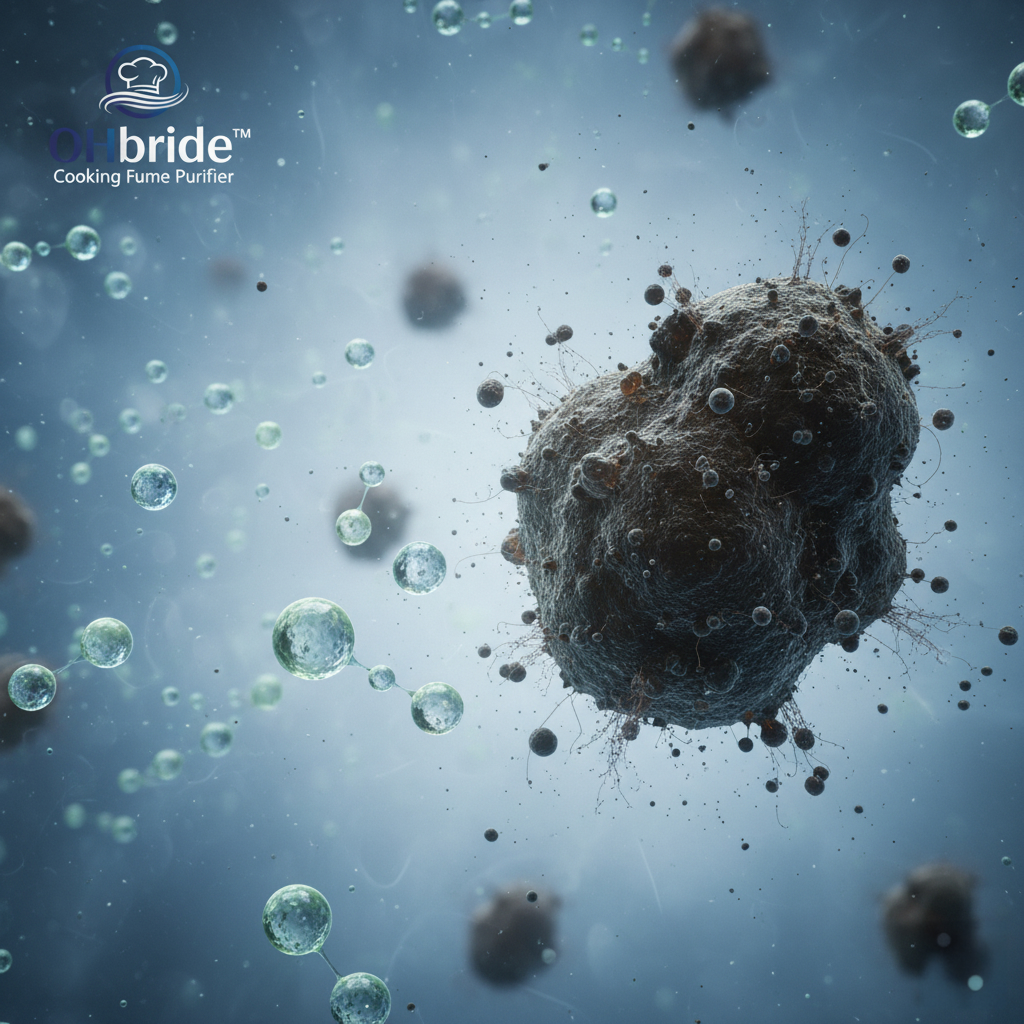
4. Final Oxidation Products
The final products of all reactions are CO₂ + H₂O + inorganic salts, which are harmless to humans and the environment.
In other words, it is a self-circulating reaction in which sterilization, deodorization, and purification occur simultaneously.
Features and Differentiation of OHbrid Technology
| Category | Conventional OH Radical Systems | OHbrid (OHbrid) |
|---|---|---|
| Radical Generation Method | Ozone, UV, catalytic, or ultrasonic reactions | Water molecule electron-transfer–based molecular cluster reaction |
| By-products | Ozone, hydrogen peroxide, NOx, etc. | None (complete reduction structure) |
| Safety | Mainly for outdoor use / limited indoor installation | Indoor installation possible (sealed reaction structure) |
| Sustainability | Reactions last only a few nanoseconds (ns) | Sustained reactivity through molecular cluster stabilization |
| Maintenance | Requires periodic cleaning and replacement | Filterless, consumable-free structure |
| Application Fields | Air purifiers, small sterilizers | Kitchen scrubbers, industrial VOC removal, HVAC systems |
OHbrid’s OH Radical Generation Technology is a non-catalytic, eco-friendly radical generation technology that replaces conventional high-energy systems such as plasma, UV, and catalytic methods.
This technology completely oxidizes and decomposes kitchen smoke, grease vapors, VOCs, and bacteria into CO₂ and H₂O, realizing an innovative structure of zero filters, zero ducts, and zero emissions.
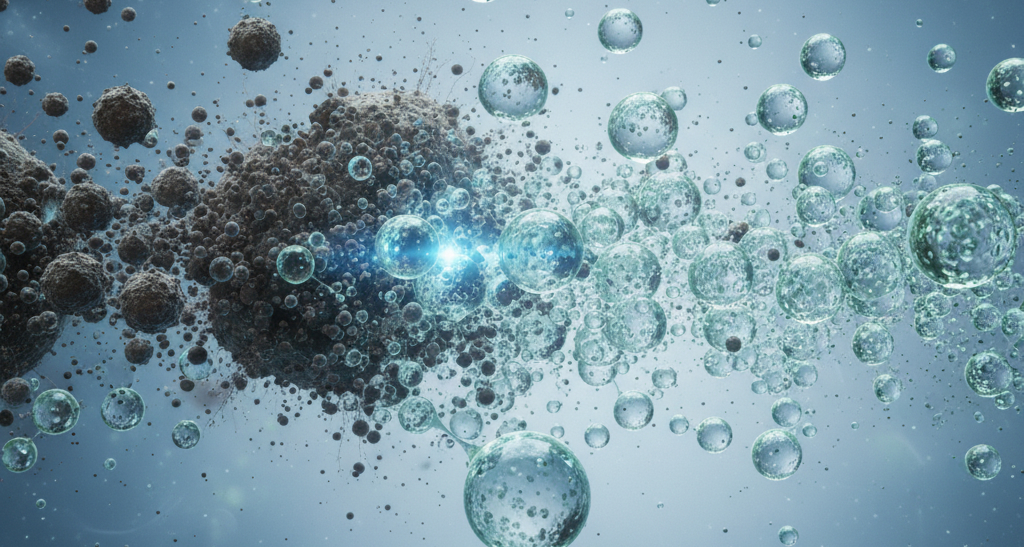
Effects of Atmospheric OH (Hydroxyl Radicals) on Humans
1. The Cleanser of the Atmosphere
In the early 1970s, the University of Leeds in the UK launched a research program to answer the question: “What do OH radicals do?”
According to the university’s findings, atmospheric hydroxyl activity neutralizes approximately 2,500 atmospheric chemical substances through about 7,000 reactions.
For this reason, OH radicals found in the atmosphere are often referred to as the “cleaners of the atmosphere.”
2. OH Radicals Are Harmless
OH radicals attack the cell walls of unicellular organisms such as bacteria and viruses, destroying them through a process known as cell lysis.
However, multicellular organisms such as humans, animals, and plants are not affected, as their internal enzymatic mechanisms and low permeability protect them from atmospheric OH radicals.
— Source: *Primer on Hydroxyl Radicals* (www.alidade-mer.com)
3. Proven Safety
The safety of OH radicals has been verified by numerous domestic and international organizations, including the Ministry of Food and Drug Safety (MFDS) in Korea.
Official statement from the U.S. National Institutes of Health (NIH): OH radicals pose no harm to the human body.
Definition by Korea’s MFDS:
An OH radical is a type of oxygen anion compound generated by applying energy to a hydroxyl group (OH). It has strong oxidizing power yet is harmless to humans.
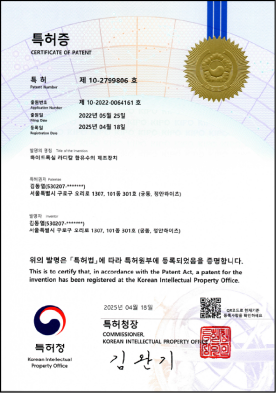
Patent Registration: 10-2023-0164426
Device for Producing Water Containing Hydroxyl Radicals
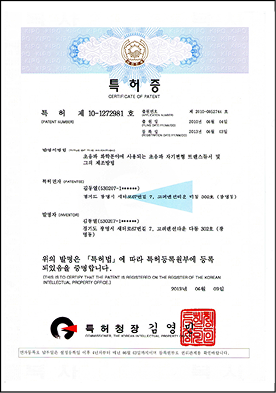
Patent Application: 2010-0052744
Air Conditioning System for Purifying Polluted Air and Removing VOCs
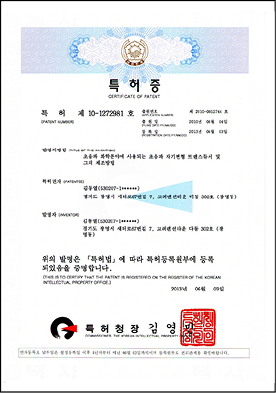
Patent Application: 10-2381853
OH Radical-Based Smart Farm Mushroom Cultivation System